

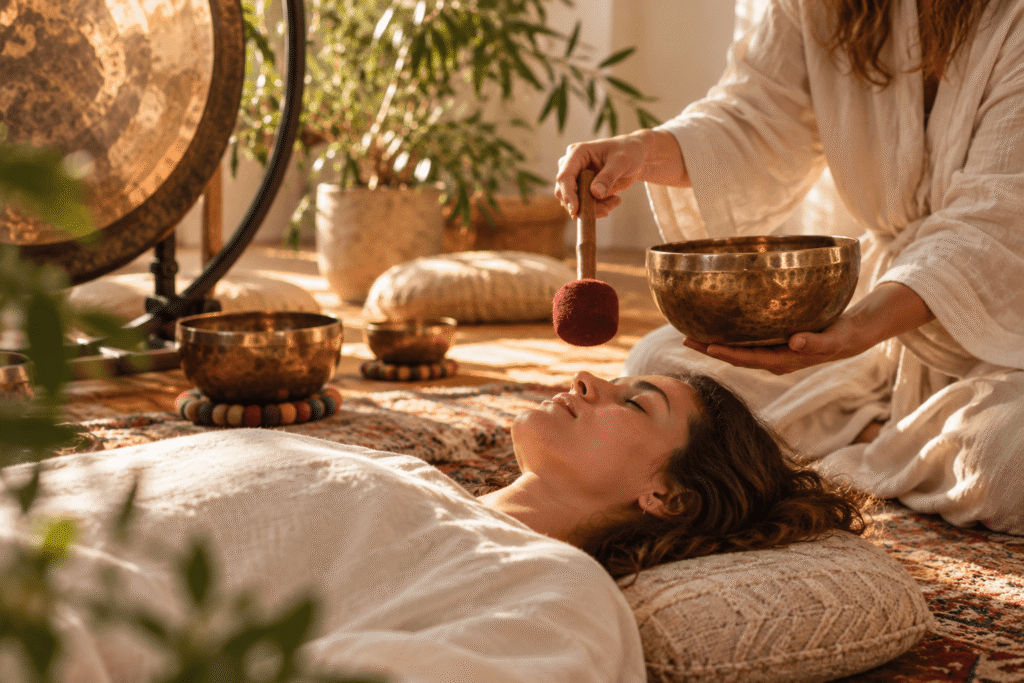
If you’ve been curious about sound healing but aren’t quite sure what happens in a session, you’re not alone. Perhaps you like the idea of an hour away from your phone, or simply want somewhere to lie down and listen without having anything to do.
You don’t need to meditate, understand the instruments or have any previous experience. This guide will help you arrive knowing a little more about what to expect – and what you’re welcome to leave behind.
What is sound healing?
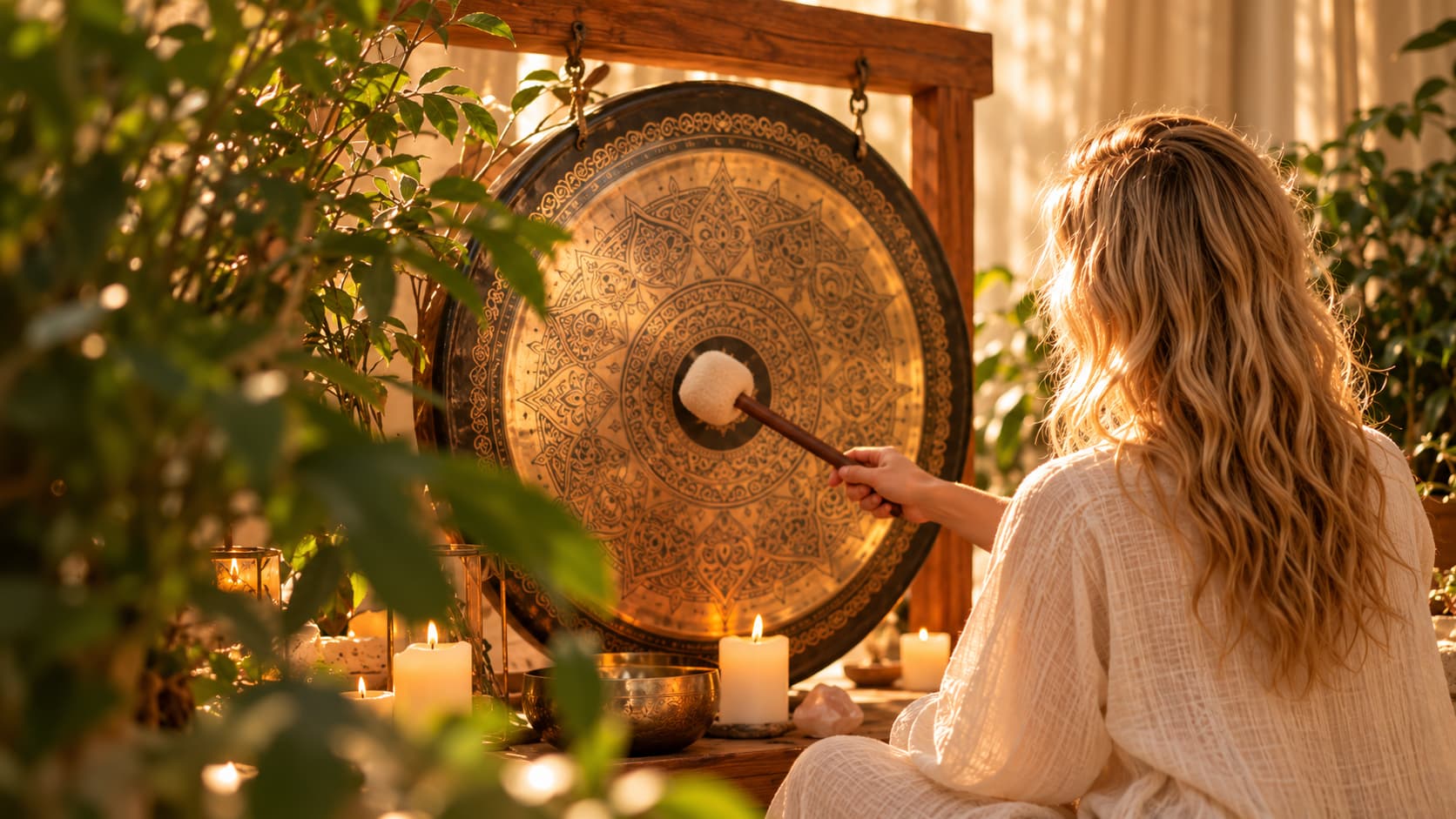
Sound healing is a broad name for practices that use sound as a focus for rest and attentive listening. In a session, a practitioner plays instruments such as singing bowls, gongs and chimes while you sit or lie comfortably nearby.
A singing bowl might produce a lingering, clear note; a gong can create a much fuller wash of sound. Chimes bring lighter tones. The instruments, pace and volume vary between practitioners and sessions. A “sound bath” describes being surrounded by sound – there’s no water involved.
How does sound healing work?
Sound begins with vibration. When a bowl or gong is played, it vibrates and creates sound waves that travel through the air. You hear those sounds and may also notice a physical sensation from some lower tones.
During a session, the changing sounds give your attention somewhere to rest. The quiet setting, time away from everyday demands and chance to get comfortable are also part of the experience. Some people find this relaxing; others simply enjoy the sounds.
Feeling calmer after a session is a personal experience, rather than proof that a particular frequency has healed the body. Sound healing should not be presented as a cure or a replacement for medical care, and I don’t promise a particular outcome.
What happens during a sound healing session?
Arrive and settle in
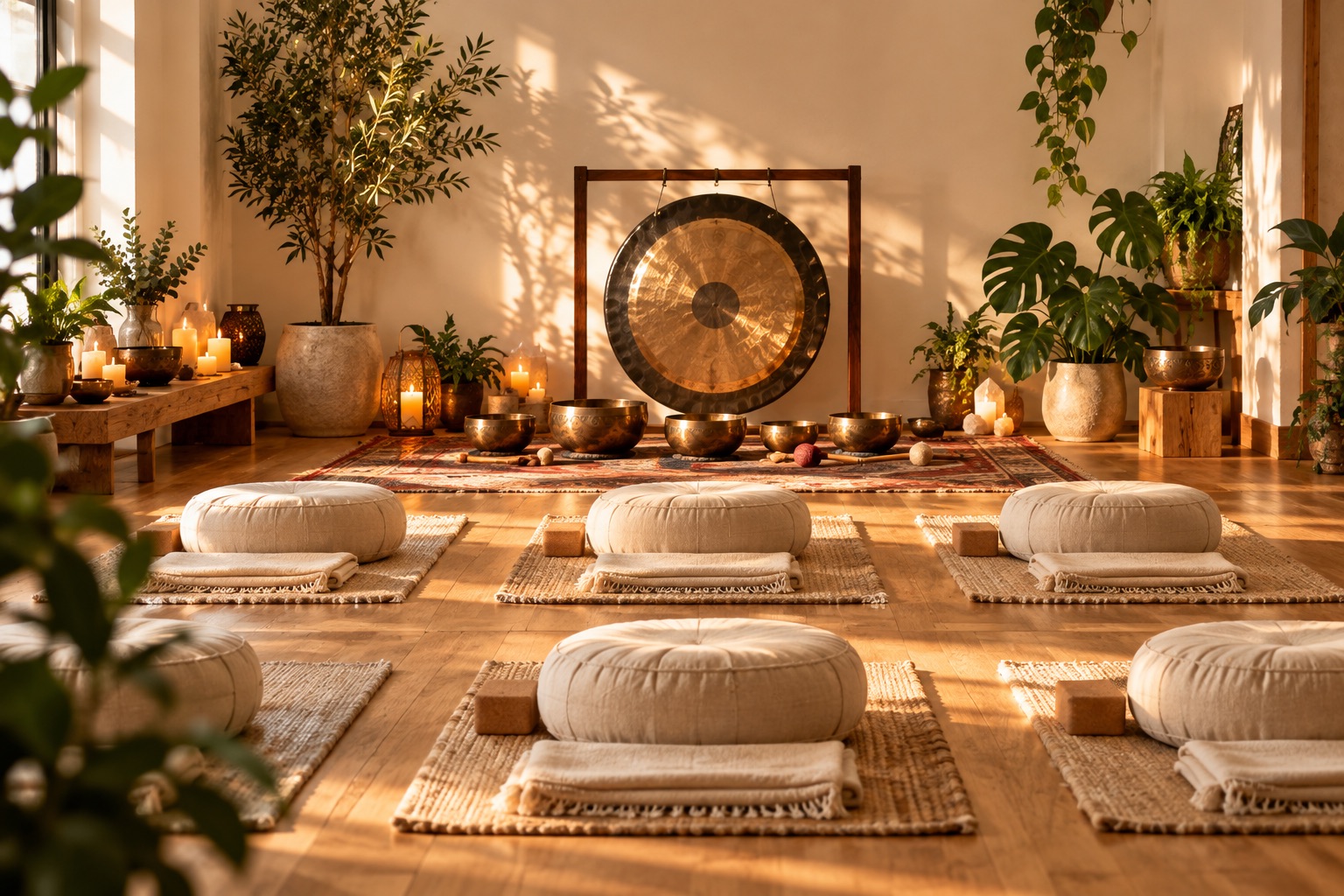
At a group sound bath, you’ll have time to find your space and get comfortable before we begin. Check your event information for arrival times and what to bring. For a 1:1 treatment, we’ll start with a short conversation about how you’re feeling and anything you’d like me to know.
Listen in your own way
I’ll introduce the session, then play the instruments with pauses between sounds. You can close your eyes if that feels comfortable, or keep them open. There’s no need to follow every note or try to make your mind go blank. You can adjust your position whenever you need to.
Take your time afterwards
We’ll bring the session to a gentle close, with time to notice the room again and sit up slowly. There’s no pressure to describe your experience or feel a certain way before you leave.
What does sound healing feel like?
It’s different for everyone, and it can be different each time. You might feel settled and sleepy, notice thoughts or emotions coming and going, or remain alert and interested in the instruments. Your mind might wander to tomorrow’s plans. None of these means you’re doing it wrong.
You don’t need a dramatic experience for the time to be worthwhile. Equally, if a sound feels too intense or you’re uncomfortable, you can let me know, change position or take a break.
Sound baths and 1:1 sound healing: which should I choose?
A group sound bath is a shared listening experience. You’ll have your own space in the room while the session unfolds for the group. It can be a welcoming introduction if you like the idea of resting alongside others, whether you come alone or with a friend.
A 1:1 sound healing session gives us more time to talk and tailor the experience to you. At Koaura, this treatment focuses on Tibetan singing bowls placed around you. It may suit you if you prefer a private setting or would like to discuss your comfort and preferences beforehand.
What should I bring to my first sound bath?
Check the details for your particular event, as venues and available equipment vary. These simple things can help you settle in:
- Comfortable clothing and an extra layer, so you can adjust if you feel cool.
- A mat or suitable padding to lie on, if your event asks you to bring one.
- A blanket and a small pillow for comfort.
- A bottle of water for afterwards.
- An eye mask if you like using one — it’s entirely optional.
For a group event, arrive a little early at the time given in your booking information. For an individual treatment, please arrive at your scheduled appointment time so I can prepare the space between sessions.
A little tip for your first visit
Comfort matters more than staying perfectly still. Before we begin, check that your head, back and knees feel supported. If lying on the floor isn’t comfortable for you, get in touch beforehand so we can discuss what might work.
Is sound healing suitable for everyone?
People have different preferences and sensitivities to sound. If louder or sustained sounds are difficult for you, please speak to me before booking so I can explain the instruments and setting. You’re always welcome to ask questions about volume, access or positioning.
If you have a health concern or are unsure whether a session is appropriate for you, ask a healthcare professional who knows your circumstances. I can explain what the session involves, but I can’t give individual medical advice.
My approach to sound healing at Koaura
My sound healing and meditation training in Nepal is part of the foundation of my work at Koaura. I bring that learning into a calm, welcoming space here in South Wales, with room for you to arrive just as you are.
I want the practical details to feel clear and the experience to feel approachable. You don’t need to know the right words, believe anything in particular or have a goal for the session. My role is to guide the experience and listen to what helps you feel comfortable.
A little space to begin
If sound healing appeals to you, you can start with curiosity rather than expectations. Read the session details, bring what you need to feel comfortable and give yourself permission simply to listen. And if there’s something you’d like to ask before coming along, I’m happy to help.